Why Sealcoating Doubles the Life of Central Valley Asphalt
Sealcoating is the cheapest insurance you'll ever buy for your asphalt. Here's the real schedule, real costs, and real climate data behind why it matters so much in the Central Valley.
Key Takeaways
- Sealcoat blocks the three things that destroy asphalt: UV oxidation, oil/gas spills, and water intrusion.
- A properly applied sealcoat can roughly double pavement lifespan for a fraction of the cost of replacement.
- Central Valley summer pavement surface temperatures can climb past 140°F, accelerating oxidation far faster than in milder climates.
- New asphalt should get its first seal coat around the 12-month mark, then every 2-3 years after that.
- J.A.R Construction Services offers free on-site estimates across Fresno, Clovis, and the greater Central Valley.
The Silent Threat to Central Valley Asphalt
Ask most Fresno or Clovis property owners what ruins asphalt fastest, and they'll point to potholes or heavy trucks. The real damage happens slower and quieter — it's the sun. Central Valley summers regularly push air temperatures past 100°F, and pavement surface temperatures run even hotter, often 40 to 50 degrees above the surrounding air on exposed asphalt. That relentless UV exposure, combined with oil drips, irrigation overspray, and the occasional winter storm, is what actually breaks asphalt down from the inside out.
Sealcoating is the single most cost-effective way to interrupt that damage cycle. This guide covers what sealcoat actually does, why the valley climate makes it non-negotiable, what a realistic budget looks like, and how asphalt sealcoating services in california can protect your pavement investment for decades.
What Sealcoat Actually Does
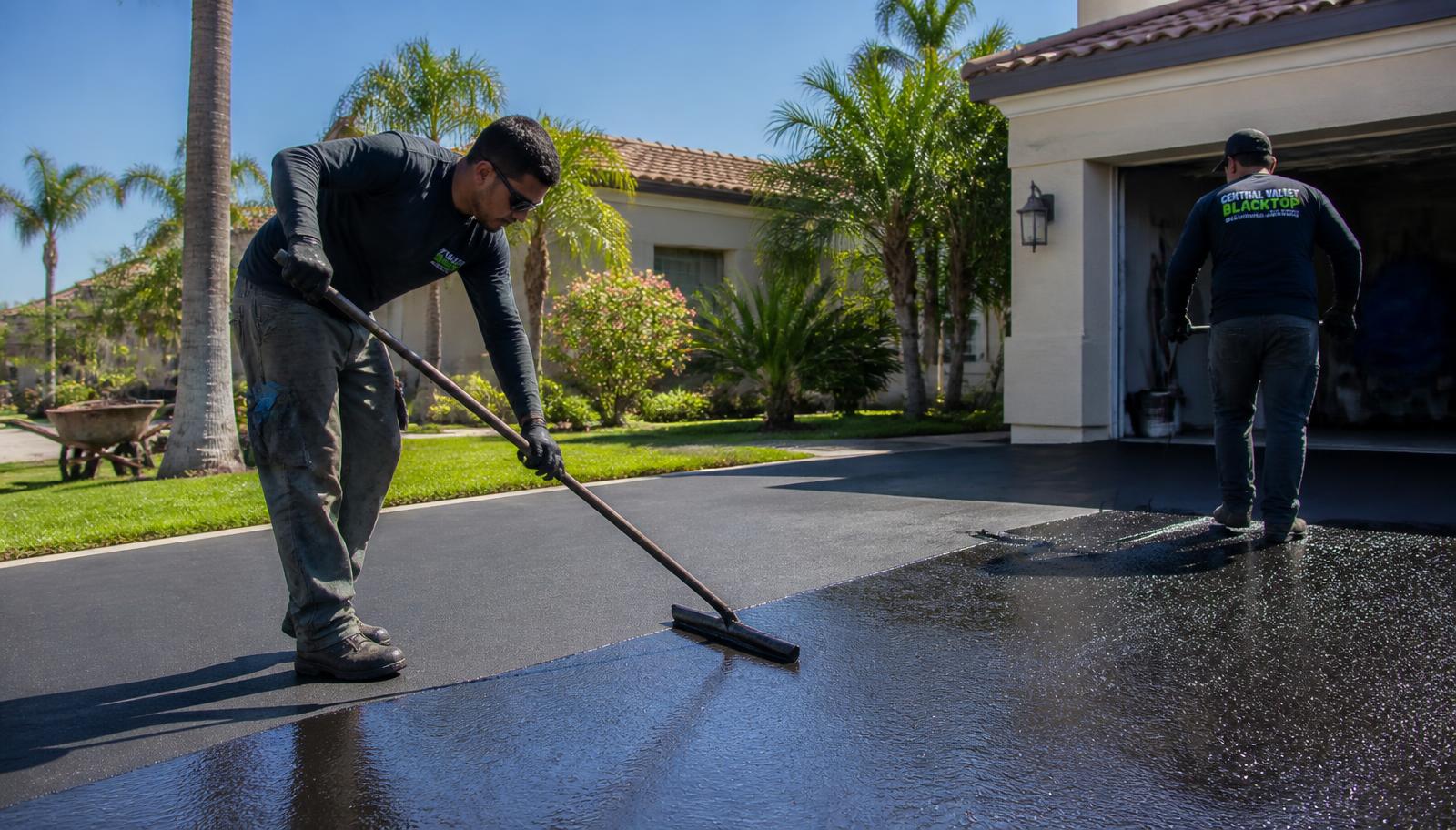
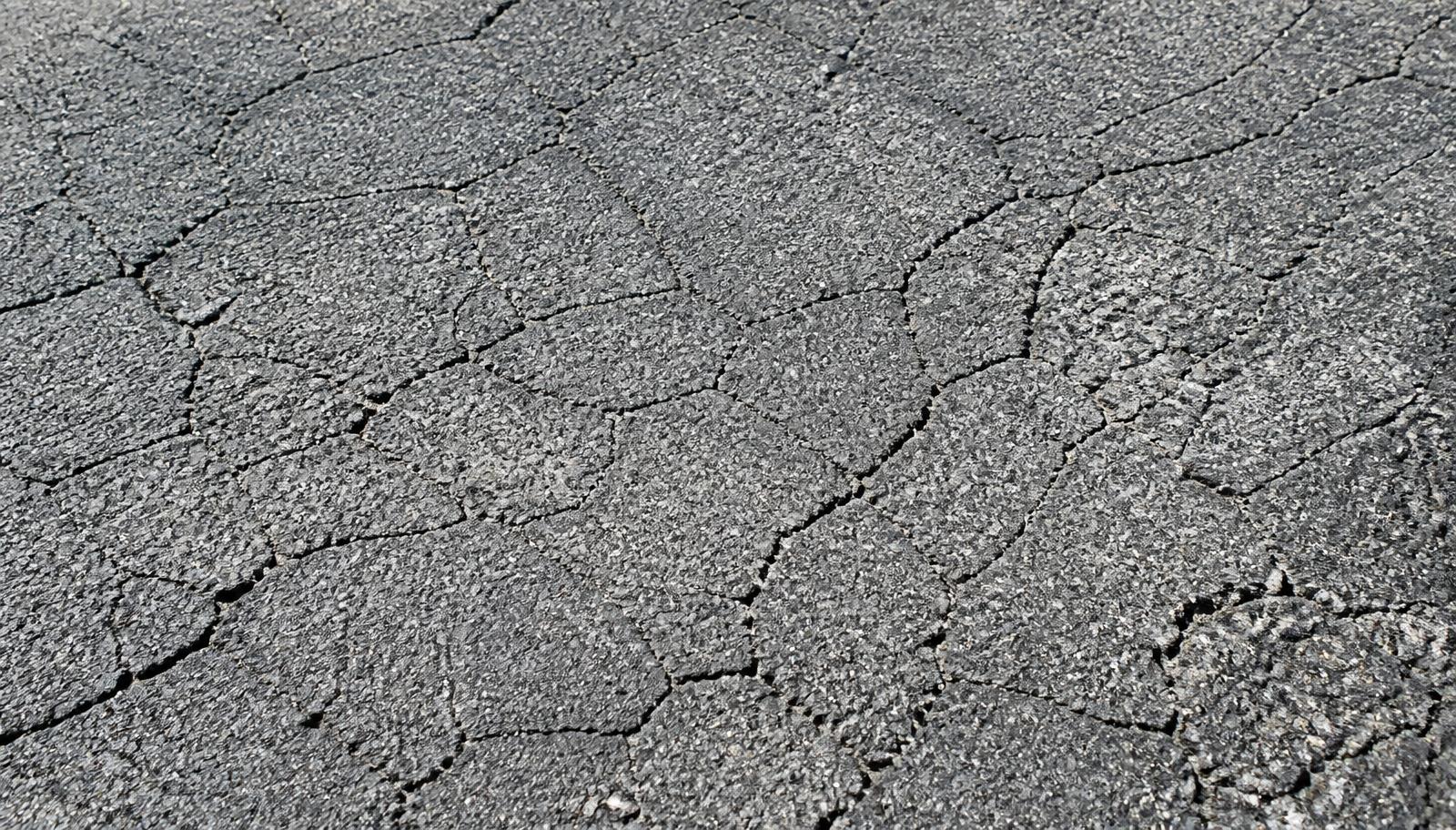
Asphalt is essentially rock aggregate held together by liquid asphalt cement, a petroleum-based binder. Left exposed, that binder oxidizes in sunlight, turns brittle, and loses the flexibility pavement needs to handle traffic and temperature swings without cracking. Sealcoat is a thin protective layer, typically an asphalt emulsion, applied over the surface to block that process before it starts.
| Threat | What It Does to Asphalt | How Sealcoat Helps |
|---|---|---|
| UV / sun exposure | Oxidizes and dries out the binder, causing brittleness, fading, and surface cracking | Reflects UV rays and shields the binder from direct exposure |
| Oil & gas spills | Dissolves the asphalt binder on contact, creating soft spots and deterioration | Creates a chemical-resistant barrier against spills |
| Water intrusion | Seeps into small cracks, then expands with heat/freeze cycles, turning cracks into potholes | Seals the surface so water sheds instead of soaking in |
| Traffic wear | Accelerates ravelling (loose aggregate) and rutting on unprotected pavement | Restores surface flexibility and reduces friction wear |
Table 1: Primary causes of asphalt failure and how sealcoat addresses each one.
Why the Valley Climate Raises the Stakes
Central Valley pavement doesn't get the luxury of a mild summer. Dark asphalt absorbs solar heat far more efficiently than the surrounding air, which is why surface temperatures routinely run 40 to 50 degrees hotter than what a thermometer reports outside.
| Month | Typical Fresno Air High | Estimated Asphalt Surface Temp* |
|---|---|---|
| June | 92°F | 130–140°F |
| July | 99°F | 140–150°F |
| August | 97°F | 135–148°F |
| September | 91°F | 128–138°F |
*Estimated using the commonly cited 40–50°F surface-over-air heat gain for dark asphalt in direct sun and Fresno-area summer averages; actual readings vary by shade, traffic, and pavement age.
How Often to Seal in Fresno & Clovis
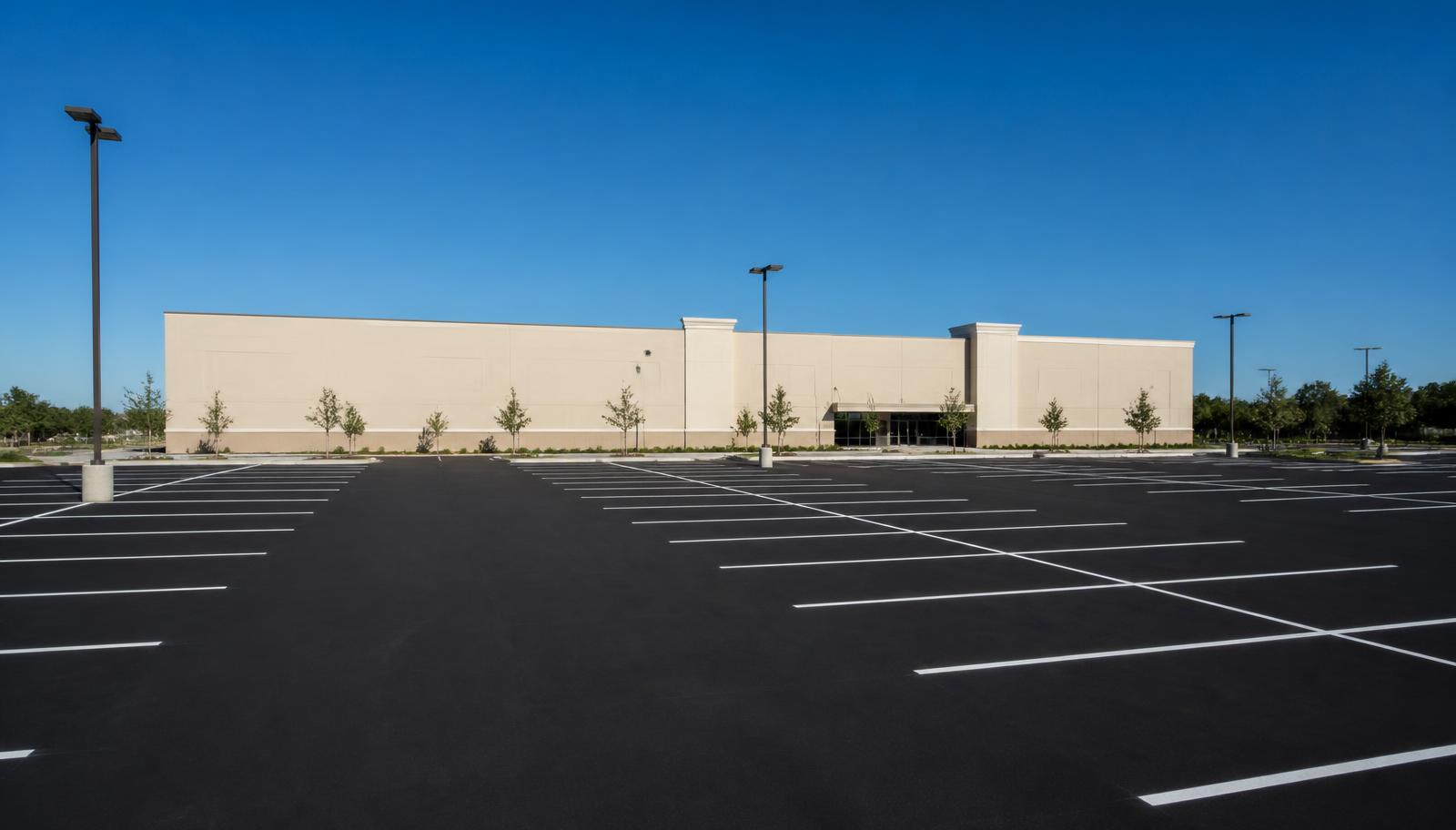
Waiting too long between coats lets oxidation and cracking outrun your maintenance schedule. Sealing too early — before new asphalt fully cures — can trap oils underneath and cause the seal itself to fail. Twelve months is the sweet spot: it lets fresh asphalt off-gas properly while still getting protection before its first full summer does lasting damage.
| Pavement Type | First Seal | Recurring Schedule |
|---|---|---|
| New asphalt (any type) | ~12 months after installation | — |
| Residential driveways | 12 months | Every 2–3 years |
| Commercial lots (moderate traffic) | 12 months | Every 2–3 years |
| High-traffic commercial / loading areas | 12 months | Every 1–2 years |
Table 2: Recommended sealcoating intervals by pavement type.
Warning Signs Your Asphalt Needs Attention
If two or more of these apply to your property, it's worth scheduling an inspection before the next Central Valley summer arrives.
- Surface looks Gray or faded rather than deep black
- Small "spiderweb" or hairline cracking across the surface
- Water pools instead of draining after rain
- Visible loose gravel or aggregate (ravelling)
- It's been more than 2-3 years since the last seal coat
Why Work With a Local Crew
J.A.R Construction Services has applied paving, grading, and sealcoating across Fresno, Clovis, and the wider Central Valley for more than a decade, backed by a team carrying 40+ years of combined trade experience. Every job includes a free on-site estimate and a one-year quality guarantee, so property owners know exactly what they're paying for before work begins.
Sealcoat quality depends heavily on surface prep, mix ratios, weather timing, and cure time between coats details a rushed crew can easily get wrong. Whether it's a single residential driveway or a multi-acre commercial lot, the services will start with the same fundamentals: proper cleaning, crack repair before coating, correct emulsion ratios, and application timed to valley weather rather than a rigid calendar.
The Bottom Line
Sealcoating won't fix a pothole caused by a burst water line or repair asphalt that's already alligator-cracked. But for pavement that's still structurally sound, it's the cheapest, most effective way to add years of service life. In a climate that puts asphalt through 100-plus-degree days for months at a time, skipping sealcoat isn't saving money it's deferring a much bigger bill. A quick call for a free estimate is the easiest way to find out exactly where your pavement stands.
Frequently asked questions
Juan A. Rodriguez Jr.
Hi, I'm Juan A. Rodriguez Jr., founder of J.A.R Construction Services. With more than 40 years of combined industry experience behind our team, I've dedicated my career to delivering dependable asphalt paving, grading, excavation, and site preparation solutions for residential and commercial properties throughout California. Through my insights, I share practical guidance on pavement construction, maintenance, and site development to help property owners protect their investments and achieve lasting results.