Industrial Asphalt Maintenance: Best Practices to Maximize Pavement Lifespan
Industrial asphalt takes a daily beating from heavy trucks, forklifts, delivery vehicles, loading operations, weather, and repeated turning movements. Without a maintenance plan, small cracks can become water-entry points, potholes, rutting, and structural failures.
Industrial asphalt takes a daily beating from heavy trucks, forklifts, delivery vehicles, loading operations, weather, and repeated turning movements. Without a maintenance plan, small cracks can become water-entry points, potholes, rutting, and structural failures.
For facilities considering industrial asphalt paving in California, maintenance should begin before visible damage becomes extensive. This guide explains practical maintenance steps, when to use them, and how proactive pavement care can help maximize service life.
What maintenance is required for industrial asphalt surfaces?
Industrial asphalt surfaces require regular inspections, crack sealing, drainage maintenance, pothole repairs, surface treatments, and periodic structural evaluation. The appropriate treatment depends on pavement condition, traffic loads, drainage, age, and the type of distress present.
A useful rule of thumb is simple: repair the cause of deterioration, not just the visible symptom. A pothole may be easy to patch, but recurring potholes can indicate underlying base, drainage, or structural problems.
1. Inspect the pavement on a regular schedule
A maintenance program starts with routine inspections. Facility managers should look for:
- Longitudinal and transverse cracking
- Alligator or fatigue cracking
- Potholes and loose aggregate
- Rutting in heavy-traffic lanes
- Depressions or standing water
- Deteriorated pavement edges
- Drainage problems
- Areas showing unusual settlement
Walk-through inspections are useful, but heavily trafficked industrial properties may also benefit from documented condition assessments. Recording the location and progression of defects makes it easier to prioritize repairs instead of responding to problems only when they become disruptive.
2. Seal cracks before water causes bigger problems
Cracks are among the earliest warning signs that an asphalt surface needs attention. Water entering through cracks can weaken supporting layers and accelerate deterioration.
Crack sealing or filling can help limit water infiltration when the pavement and crack type are appropriate for the treatment. However, not every crack should be treated identically. Wide, active, interconnected, or structurally significant cracking may require a more comprehensive evaluation.
3. Keep drainage working properly
Even well-constructed asphalt can deteriorate prematurely when water is allowed to remain on or beneath the pavement.
Inspect drains, inlets, gutters, and surrounding grades regularly. Remove accumulated debris and address areas where water repeatedly ponds.
For an industrial property, drainage deserves particular attention around loading docks, truck lanes, entrances, and low points. Heavy traffic combined with persistent moisture can place additional stress on pavement that is already compromised.
4. Repair potholes and localized damage promptly
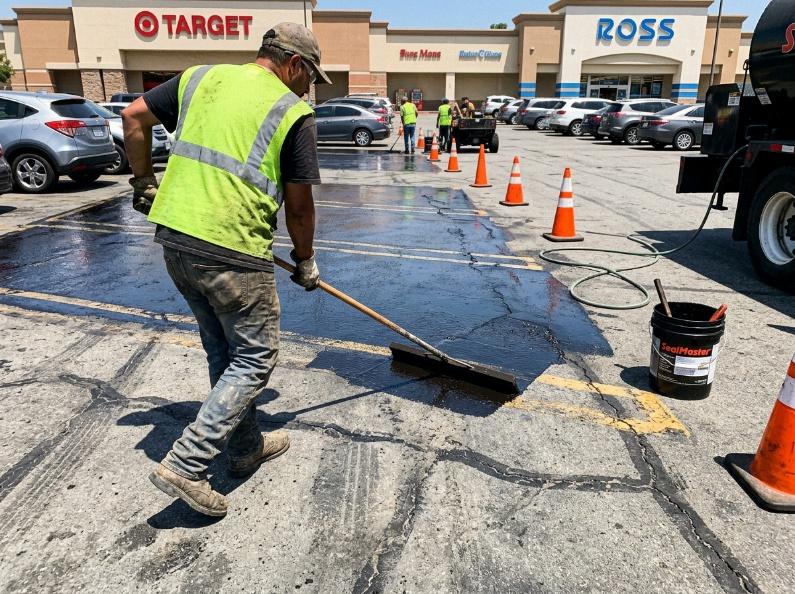
Pothole repair should not be treated as the entire maintenance strategy. It is one part of a broader pavement preservation program. When a pothole develops, determine why it formed. If the surrounding pavement has cracking, poor drainage, settlement, or base failure, a surface-only repair may not provide a durable solution. For California industrial paving projects, repair methods should be selected according to the pavement's condition and expected loading rather than simply choosing the fastest available patch.
5. Match the treatment to pavement condition
Not every industrial surface needs the same maintenance treatment. Applying an intensive treatment too early can be unnecessary, while waiting until structural failure can sharply increase the scope of work.
| Pavement condition | Typical concern | Maintenance approach |
|---|---|---|
| Good with minor surface defects | Early aging or cracking | Routine inspection and preventive treatments |
| Fair with moderate cracking | Water infiltration and surface deterioration | Crack treatment, localized repairs, or suitable surface treatment |
| Rutting or repeated failures | Possible structural deficiency | Engineering assessment and corrective work |
| Extensive fatigue cracking/potholes | Significant pavement failure | Rehabilitation or reconstruction evaluation |
The FHWA emphasizes that preservation works best when pavement is addressed while it remains in satisfactory condition rather than waiting for serious deterioration.
6. Consider traffic when planning maintenance
Industrial pavement in California experiences different stresses from residential driveways or ordinary parking areas. Heavy trucks can concentrate loads in specific lanes, while tight turns can increase surface stress around loading areas. Maintenance planning should therefore consider:
- Vehicle weight and frequency
- Turning movements
- Loading and unloading zones
- Forklift traffic
- Traffic concentration in specific lanes
- Seasonal weather conditions
- Existing pavement thickness and condition
This information helps determine whether a surface repair is appropriate or whether the pavement requires deeper corrective work.
7. Plan maintenance instead of waiting for failure
A proactive maintenance schedule allows property owners to identify developing problems, budget for repairs, and reduce unexpected pavement disruptions. Choosing the right contractor also matters. If you're comparing contractors, our guide on how to choose the best paver contractor in California offers additional considerations for evaluating experience, project requirements, and service capabilities.

A practical maintenance cycle for industrial properties
A straightforward maintenance process can help facility managers stay ahead of deterioration:
- Inspect: Document cracks, potholes, rutting, drainage issues, and surface wear.
- Prioritize: Separate cosmetic concerns from defects that may affect pavement structure.
- Diagnose: Determine whether water, traffic, settlement, or surface aging is contributing to the problem.
- Repair: Use a treatment suited to the pavement condition and defect.
- Monitor: Reinspect repaired areas and track recurring problems.
- Plan ahead: Schedule preventive maintenance before deterioration becomes widespread.
Protecting long-term pavement performance
Industrial asphalt maintenance is not about making repairs as frequently as possible. It is about making the right repair at the right time.
For facilities requiring California industrial paving, regular inspections, effective drainage, timely crack treatment, appropriate patching, and condition-based rehabilitation can help protect the pavement investment. A structured maintenance program also gives facility managers a clearer basis for budgeting and scheduling future work.
The goal is straightforward: identify deterioration early, address underlying causes, and avoid allowing manageable pavement defects to become major industrial-site disruptions.
Planning maintenance for an industrial asphalt surface? Contact J.A.R Construction Services to discuss your property's paving and heavy-duty pavement requirements.
Key Takeaways
- Regular inspections help identify cracks, potholes, drainage problems, rutting, and other defects before they become more extensive.
- Crack treatment, drainage maintenance, and timely repairs are essential parts of industrial asphalt maintenance.
- Heavy traffic patterns and pavement conditions should determine the appropriate repair or preservation method.
- Proactive maintenance can help industrial property owners plan repairs before pavement deterioration becomes disruptive.
Frequently asked questions
Juan A. Rodriguez Jr.
Hi, I'm Juan A. Rodriguez Jr., founder of J.A.R Construction Services. With more than 40 years of combined industry experience behind our team, I've dedicated my career to delivering dependable asphalt paving, grading, excavation, and site preparation solutions for residential and commercial properties throughout California. Through my insights, I share practical guidance on pavement construction, maintenance, and site development to help property owners protect their investments and achieve lasting results.