Asphalt Crack Repair & Pothole Patching in Fresno: Fix Small Damage Before It Spreads
A practical guide for Fresno and Central Valley property owners
Key Takeaways
- Small asphalt cracks can allow water into the pavement structure, accelerating deterioration.
- Crack filling is generally suited to sound pavement with manageable cracks; potholes and deeper failures may require patching or localized reconstruction.
- Caltrans notes that temperature changes, precipitation, and solar radiation can affect pavement performance, making climate-aware maintenance important in California.
- The right repair depends on the size, pattern, depth, drainage conditions, traffic load, and condition of the surrounding pavement.
- Early maintenance can help property owners avoid turning localized damage into a larger resurfacing or reconstruction project.
Asphalt Crack Repair & Pothole Patching: What Fresno Property Owners Should Know
A crack in an asphalt driveway, parking lot, or private roadway can look like a minor cosmetic issue. In reality, it can be the first visible sign that moisture, traffic, age, or environmental stress is beginning to weaken the pavement. For Fresno property owners, dealing with damage early is especially important because pavement has to withstand intense summer heat, ultraviolet exposure, seasonal rain, and daily vehicle loads. If you are searching for local pavement maintenance, J.A.R Construction Services can help assess the condition of the surface and identify an appropriate repair approach.
According to the Federal Highway Administration (FHWA) guidance on pothole repair, potholes are localized pavement failures created when weakened asphalt and/or base material breaks apart and is removed by traffic and environmental action. FHWA guidance also distinguishes pothole patching from permanent reconstruction: patching addresses localized distress, while severely damaged areas may require deeper repair or reconstruction.
That means the goal is not simply to fill a hole or cover a crack. The goal is to identify why the pavement is failing and choose a repair that matches the condition of the surface and the layers underneath.
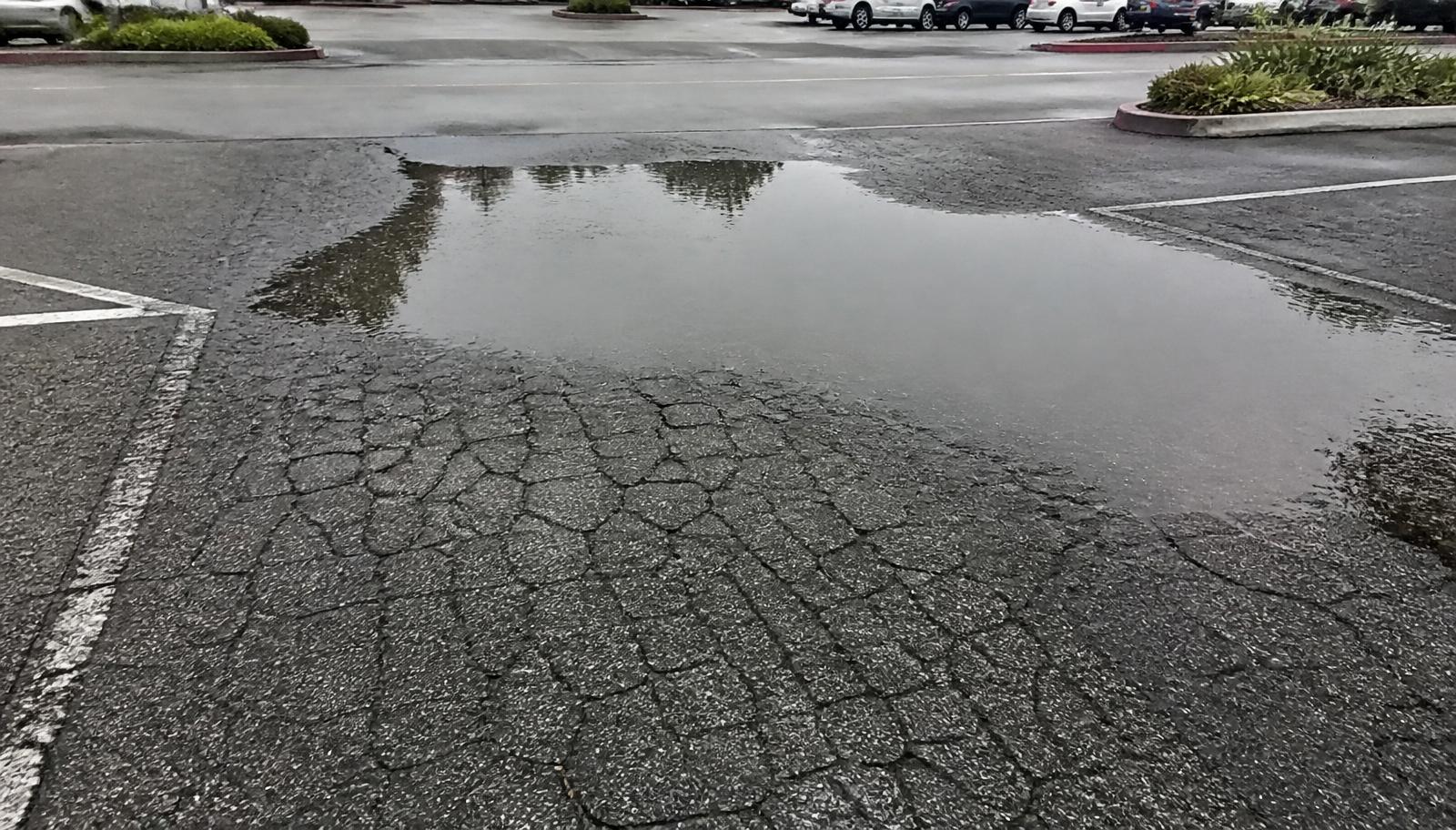
Why Asphalt Cracks Become Bigger Problems
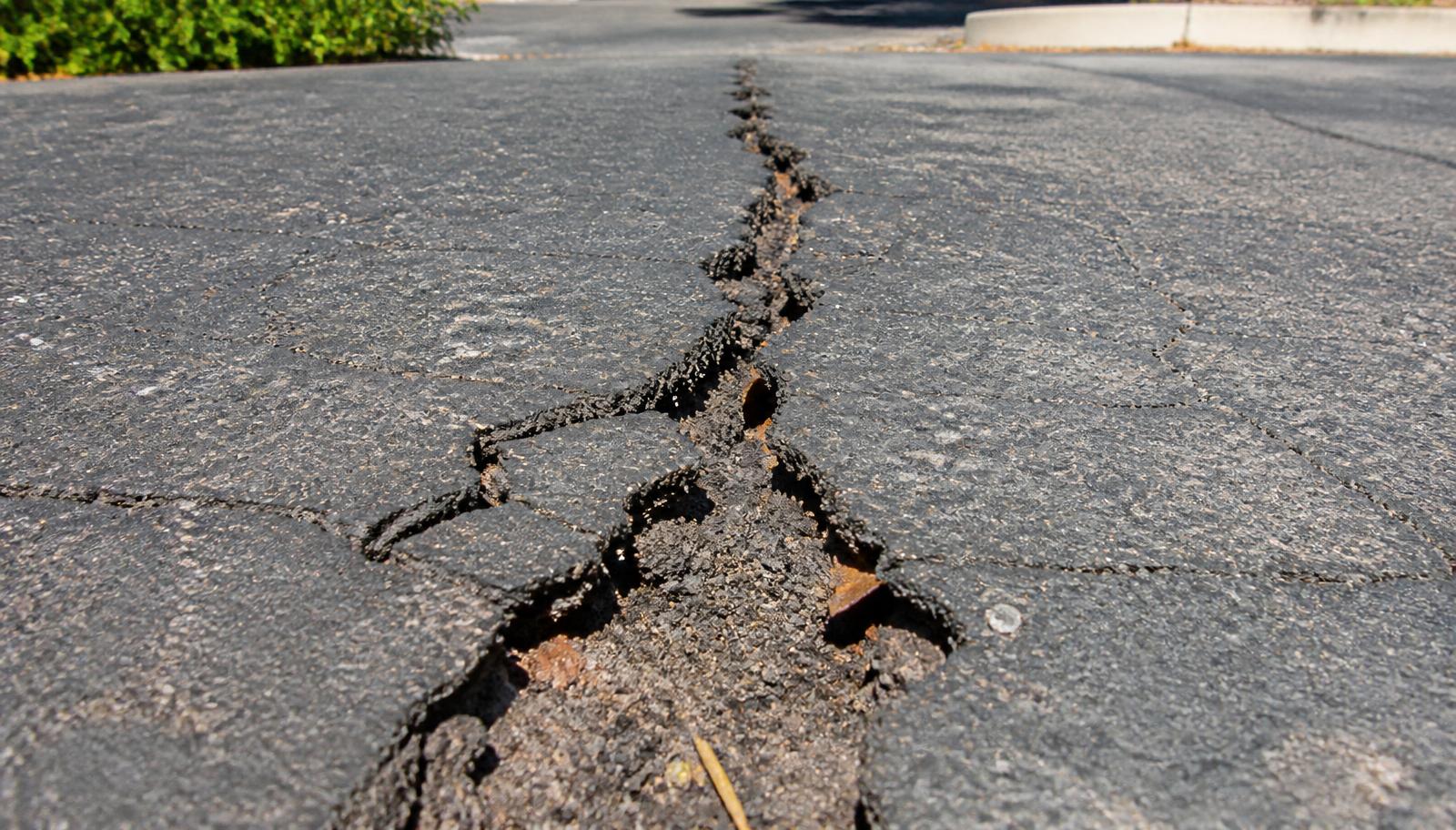
Cracks create pathways for water to reach the pavement structure. Once moisture gets below the surface, it can weaken supporting materials and contribute to additional deterioration. Vehicle traffic then repeatedly loads the weakened area, causing cracks to widen, connect, or break apart.
Climate also matters. Caltrans explains that temperature changes can cause pavement to expand and contract, while precipitation can allow water to infiltrate base and subbase layers. Solar radiation can also contribute to asphalt oxidation. These factors do not mean every crack will become a pothole, but they reinforce why exposed pavement damage should be evaluated rather than ignored.
Crack, Pothole, or Structural Failure? Know the Difference
| Visible Condition | Typical Meaning | Common Repair Approach | Priority |
|---|---|---|---|
| Hairline / narrow cracks | Early surface distress | Crack filling or sealing after cleaning | High for prevention |
| Wider isolated cracks | More advanced surface movement | Cleaning, sealing, or localized patching | High |
| Small potholes | Localized pavement breakup | Saw-cut or properly prepared patch | Immediate |
| Alligator / interconnected cracking | Likely base or structural distress | Localized reconstruction or mill-and-overlay assessment | Immediate |
Note: This table is a practical screening guide, not a substitute for an on-site pavement assessment.
When Should You Repair Asphalt Cracks?
Timing matters. If cracks are relatively limited and the surrounding asphalt remains structurally sound, crack treatment can help keep moisture out and slow further deterioration. FHWA has published detailed guidance on crack sealing and filling, including when crack treatment is appropriate and how performance can be evaluated.
If the pavement around the crack is soft, depressed, badly broken, or heavily alligator-cracked, simply filling the visible opening may not address the underlying problem. A professional should inspect the area to determine whether patching, deeper repair, resurfacing, or reconstruction makes more sense.
For Fresno-area properties, it is also smart to inspect pavement before seasonal weather changes and after periods of heavy use. Catching a developing pothole while it is still localized can make the repair more manageable than waiting until surrounding pavement has failed.
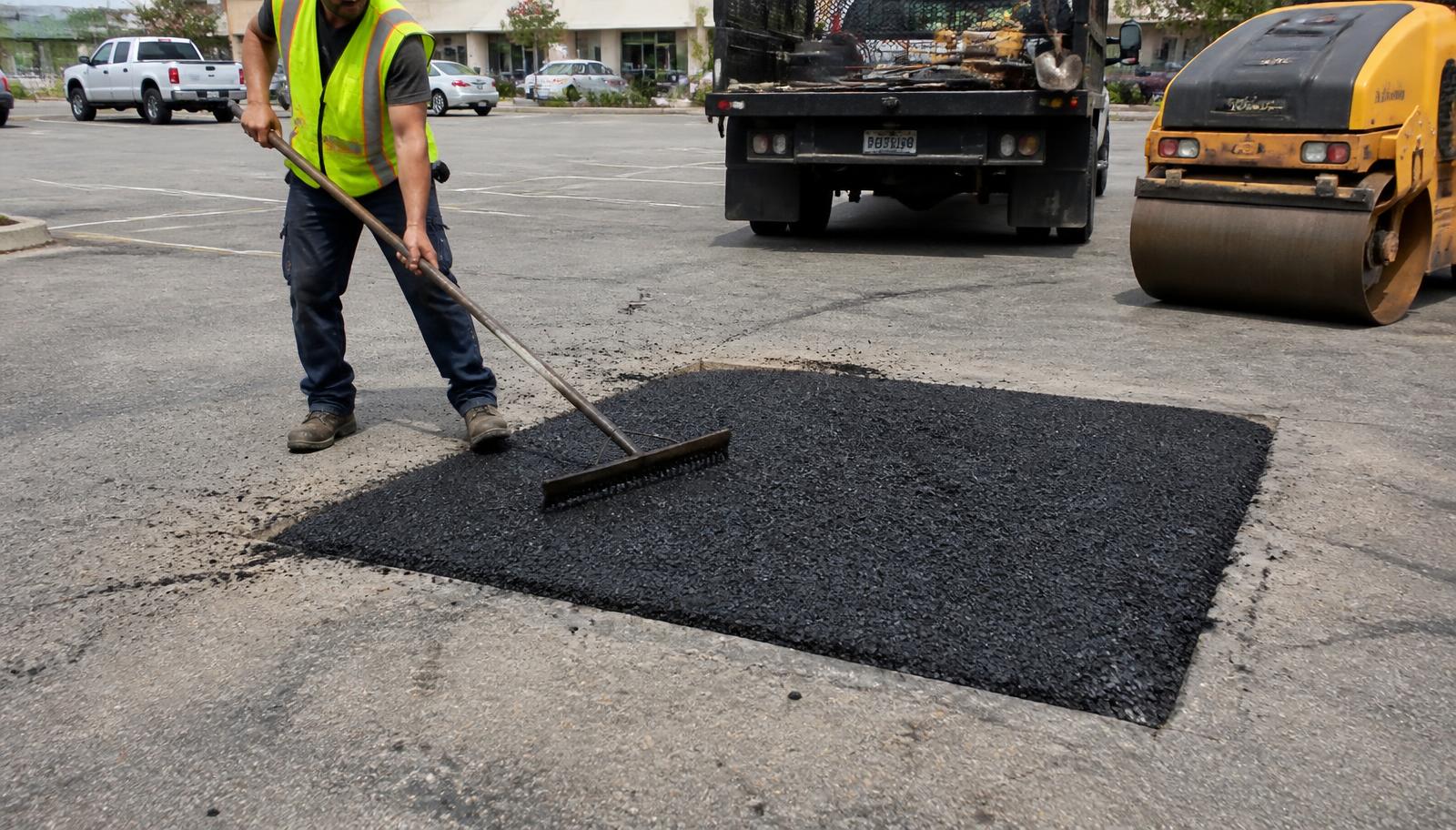
How Professional Pothole Repair Works
| Step | What Happens |
|---|---|
| 1. Inspect | The damaged area and surrounding pavement are evaluated for cracking, settlement, drainage issues, and traffic-related wear. |
| 2. Prepare | Loose debris, failed material, and moisture are removed. For more durable patches, the damaged area may be cut back to sound pavement. |
| 3. Repair | Appropriate asphalt repair material is placed according to the size and condition of the failure. |
| 4. Compact | Compaction is essential because a poorly compacted patch can deteriorate quickly under traffic. |
| 5. Evaluate the Cause | If water, weak base material, drainage, or widespread structural distress is involved, additional corrective work may be recommended. |
Repair vs. Resurface vs. Reconstruct
Not every damaged asphalt surface needs to be completely replaced. A localized repair may be the best choice when the surrounding pavement is still sound. Resurfacing can make sense when deterioration is more widespread but the underlying pavement structure remains suitable. Reconstruction is generally considered when the pavement or supporting base has substantial structural failure.
The key is matching the treatment to the actual condition. Choosing a repair solely because it is the least expensive option today can create repeat work if the underlying cause is left untreated.
| Option | Best Fit | Main Benefit | Limitation |
|---|---|---|---|
| Crack sealing/filling | Limited cracks, sound surrounding pavement | Helps limit moisture entry | Not a fix for major structural failure |
| Pothole / localized patch | Isolated surface failures | Addresses localized broken pavement | May not solve widespread base problems |
| Mill & overlay / resurfacing | Widespread surface distress with adequate base | Renews the pavement surface | Underlying structural problems may remain |
| Reconstruction | Severe structural deterioration | Addresses failed pavement and supporting layers | More extensive and costly |
What the Real-World Data Says
The FHWA Long-Term Pavement Performance (LTPP) program contains pavement performance, construction, traffic, and environmental information for more than 2,500 pavement sections in the United States and Canada. FHWA also maintains datasets covering pavement distress and climate variables such as precipitation, temperature, wind, humidity, and solar conditions. This matters because pavement deterioration is not driven by one factor alone; traffic, materials, structure, and environment interact over time. View FHWA LTPP data and research
For California specifically, Caltrans identifies temperature, precipitation, and solar radiation among the climate factors that can affect pavement performance. In practical terms, property owners should think of maintenance as a process: inspect the surface, address water entry and localized failures early, and monitor whether the surrounding pavement is showing broader distress.
Why Work With J.A.R Construction Services?
For property owners who need pavement evaluation or repair, J.A.R Construction Services provides asphalt paving, repair, grading, excavation, and site-preparation services for residential and commercial properties. The company states that its team brings more than 40 years of combined industry experience and serves Fresno and surrounding Central Valley communities.
If you are looking for asphalt crack repair in california, the right first step is to have the pavement condition assessed so the repair strategy fits the actual damage.
Final Thoughts
A crack or pothole is easier to dismiss when it is small, but pavement deterioration rarely improves on its own. Early attention can help protect the surrounding asphalt, reduce water-related damage, and give property owners more repair options. Whether the right solution is crack treatment, patching, resurfacing, or reconstruction, the best decision starts with understanding what is happening below and around the visible damage.
For Fresno and Central Valley property owners, J.A.R Construction Services can help evaluate asphalt repair and paving needs and recommend a practical path forward.
Frequently asked questions
Juan A. Rodriguez Jr.
Hi, I'm Juan A. Rodriguez Jr., founder of J.A.R Construction Services. With more than 40 years of combined industry experience behind our team, I've dedicated my career to delivering dependable asphalt paving, grading, excavation, and site preparation solutions for residential and commercial properties throughout California. Through my insights, I share practical guidance on pavement construction, maintenance, and site development to help property owners protect their investments and achieve lasting results.